
Homeowner's Guide
Homeowners Insurance and Foundation Repair in Colorado: What Coverage Really Looks Like
Foundation repair insurance coverage confuses most Colorado homeowners. See what's covered, what's not, and book a free inspection now.
Many Colorado homeowners assume their insurance policy will pay for foundation repair the moment a crack shows up. This article breaks down what homeowners insurance foundation repair coverage actually includes, why Colorado's clay soil makes this such a common question, and what your real options look like when a claim gets denied.
You notice a crack creeping across the basement wall, a door that won't latch right, or a gap opening above a window frame. The first call is usually to an insurance agent, not a contractor, and that call often ends with more confusion than answers.
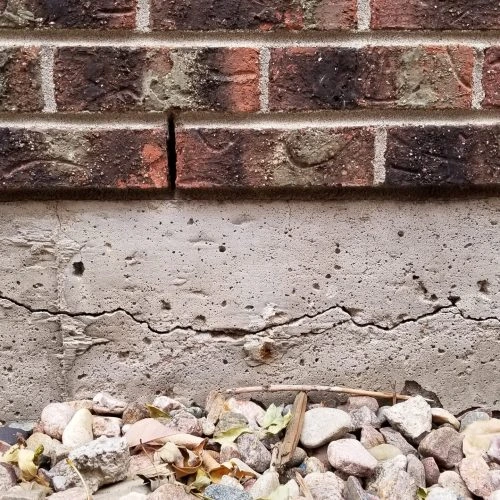
Why Colorado Homeowners Ask About Foundation Repair Insurance Coverage So Often
Along the Front Range and through the Colorado Springs area, most homes sit on expansive clay soil. That soil swells when it gets wet and shrinks when it dries out, and Colorado's swing between drought years and heavy spring runoff keeps that cycle going. Add in freeze-thaw movement through the winter months, and a foundation can shift a little every season for years without anyone noticing until the drywall cracks or a floor starts to slope. We've covered how this plays out on job sites in our article on the Colorado drought and clay soil situation, and it's the backdrop for almost every foundation repair insurance coverage question we get asked.
The Colorado Geological Survey lists swelling soil as one of the state's most common geologic hazards, and it's a big part of why this topic matters more here than in states with sandier or more stable ground.
What Standard Homeowners Insurance Actually Covers
A typical homeowners policy is built around sudden, accidental events. Fire, wind, hail, and a pipe that bursts overnight are the kinds of losses insurers expect to pay out on. According to the National Association of Insurance Commissioners, standard policies generally exclude earth movement and flood damage, and that holds true for Colorado homeowners as much as anywhere else in the country.
That distinction matters because foundation problems tied to expansive clay soil don't happen suddenly. They build over months or years, which puts most foundation repair insurance coverage claims tied to soil movement outside what a standard policy will pay.
| Peril | Typically Covered? | Colorado Example |
|---|---|---|
| Fire or lightning | Yes | House fire from an electrical short |
| Wind and hail | Yes | Roof damage from a spring hailstorm |
| Sudden pipe burst | Usually | Frozen supply line splits overnight |
| Foundation settlement from soil movement | Usually not | Expansive clay shifting under a footing |
| Flood or groundwater seepage | Usually not | Snowmelt pooling against a foundation wall |
| Gradual seepage or long-term moisture | Usually not | Slow basement leak over several seasons |
Where Foundation Repair Insurance Coverage Gets Complicated in Colorado
Sudden Damage Versus Gradual Settlement
Adjusters draw a hard line between sudden accidental damage and gradual settlement. A pipe that bursts and floods a basement overnight is treated differently than a foundation that has been slowly settling as clay soil pulls moisture in and out over several dry summers and wet springs. Almost every case we see involving expansive clay falls into that second category, which is exactly why so many homeowners are surprised when a claim gets denied even though the crack in front of them is real and the repair bill isn't small.
When an Engineering Report Can Change the Outcome
This is where an engineering-backed inspection earns its keep. We've walked crawlspaces where a leaking sprinkler line had eroded soil out from under a footing, a sudden and identifiable cause that can support a claim, versus homes where the movement was simply normal seasonal clay behavior with no single triggering event. A stamped report that documents the actual cause gives a homeowner something concrete to bring back to their insurer, even if the final answer is still no.
Before you call your insurance company, it helps to document what you're seeing. Here's what an engineer or adjuster will usually look for:
- Stair-step cracks running through block or brick foundation walls
- Doors and windows that stick or won't latch properly
- Gaps opening up above window and door frames
- A basement wall that bows or leans inward
- Floors that feel uneven or noticeably sloped
- Cracks wider than a quarter inch, especially horizontal ones
What To Do When Foundation Repair Insurance Coverage Falls Short
If your policy won't pay, you still have real options. Repairs like helical piers or foundation settlement correction are engineered to stop the movement for good, and 0% financing is available so the cost doesn't have to come out of pocket all at once. A lifetime transferable warranty on the repair also protects the investment long after the work is done, which matters if you plan to sell the home down the road.
Getting a Straight Answer on Your Colorado Home's Foundation
Whether you're in the Colorado Springs area or the Denver Metro region, the fastest way to know where you stand is a free, no-pressure inspection. We'll tell you honestly what we see, what caused it, and whether it's worth pursuing with your insurer before you spend time on a claim that clay soil movement is unlikely to cover.
Final Thoughts on Homeowners Insurance and Foundation Repair Coverage
Foundation repair insurance coverage almost always comes down to one question: was the damage sudden, or did it happen gradually. In Colorado, expansive clay soil means most foundation movement falls into the gradual category, which standard policies typically exclude. An honest, engineering-backed inspection is the clearest way to understand your actual cause and your actual options. If you're seeing cracks, sticking doors, or sloped floors, schedule a free inspection and get a straight answer before you call your insurance company.
FAQs
Does homeowners insurance cover foundation repair in Colorado?
Usually not when the cause is gradual soil movement. Foundation repair insurance coverage typically applies only to sudden, accidental events like a burst pipe, not the slow shifting caused by Colorado's expansive clay soil.
What counts as an earth movement exclusion?
Most policies exclude damage from soil settling, shifting, or swelling, even when it happens slowly over time. This is the main reason foundation repair insurance coverage claims tied to Colorado clay soil often get denied.
Will insurance pay for foundation repair if a plumbing leak caused it?
Sometimes. If a sudden pipe failure eroded soil under your footing, that can qualify for foundation repair insurance coverage. An engineering report helps identify whether the cause was sudden or gradual.
How much does foundation repair cost without insurance?
Costs vary by repair method and severity, but 0% financing is available so the lack of foundation repair insurance coverage doesn't have to delay fixing the problem.
Can an engineering report help with an insurance claim?
Yes. A stamped report documents the actual cause of the damage, giving you clear evidence to bring to your insurer even when foundation repair insurance coverage isn't guaranteed.