
Expansive Clay Soil on the Front Range: Why Colorado Foundations Move, Crack, and Heave
Most foundation trouble along the Front Range is not a building defect. It is the ground. A large share of the soil from Denver down through Colorado Springs is expansive clay, the kind that swells when it gets wet and shrinks when it dries. That movement works on the concrete above it season after season. Here is what expansive clay is, why so much of it sits under this region, and how it cracks and lifts the foundations built on top of it.
If you own a home in Colorado Springs or anywhere along the Front Range, the single most useful thing to understand about your foundation is the soil it rests on. Nearly every crack, stuck door, and uneven floor we get called out to look at traces back to the same source, and it is not bad construction. It is clay that will not hold still.
What Expansive Clay Soil Actually Is
Soil is a mix of sand, silt, and clay. Sand and silt mostly stay put when they get wet. Clay does not. Clay minerals pull water in between their particles and swell, the way a dry sponge thickens when you soak it. Let that clay dry out and it shrinks back and pulls apart. The more of these active clay minerals a soil holds, the more it moves, and that is what we mean when we call a soil expansive.
A foundation is heavy and rigid. The clay under it is neither. When the ground swells unevenly under different parts of the house, the concrete has to go somewhere, so it cracks along its weakest lines. That is the whole mechanism, and everything else is a detail of where the water comes from and how much the soil moves.
Why the Front Range Sits on So Much of It
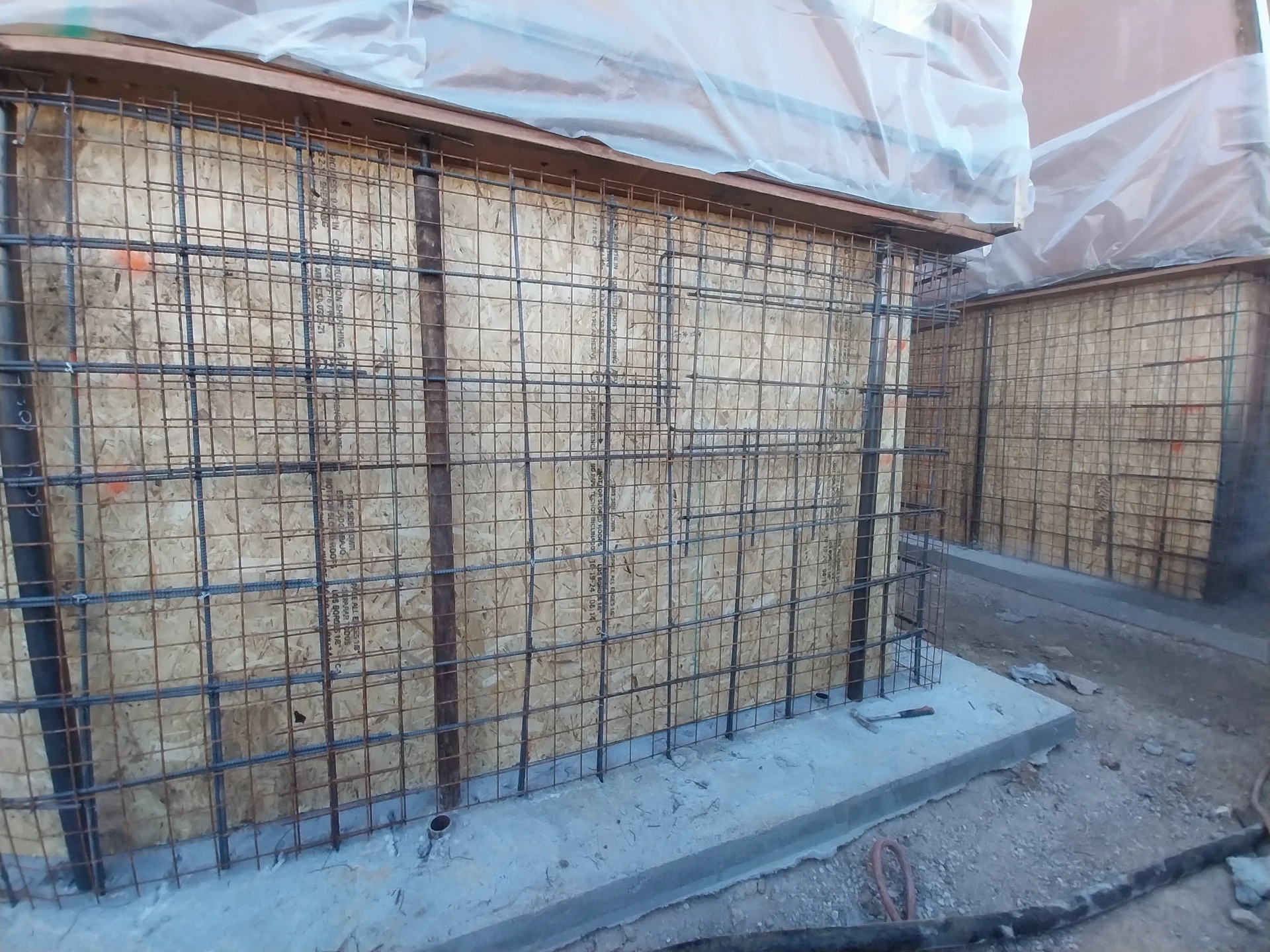
The soils under much of the Denver and Colorado Springs corridor formed from old clay-rich bedrock and the material washed down off the mountains over a very long time. The result is a lot of ground with a high clay content, and in places that clay is highly active. It is common enough here that the Colorado Geological Survey has long flagged expansive soils as one of the state's most widespread and costly geologic hazards for homeowners.
Our climate turns that clay from a fact into a problem. Long dry stretches pull the moisture out of the ground and the clay shrinks. Then spring snowmelt and the summer monsoon soak it and it swells. The bigger the swing between wet and dry, the more the soil moves, and the harder it works on anything built on it. We walk through one hard version of that cycle in our piece on how Colorado's drought and monsoon pattern cracks foundations.
How Clay Moves a Foundation
Expansive clay works on a house in three ways, and a single home often sees more than one at once.
- Heave. Soil under one part of the foundation takes on water, swells, and pushes that section up. A floor that slopes up toward the middle or a door frame that suddenly binds at the top can both come from heave.
- Settlement. Soil that dries and shrinks, or was poorly compacted to begin with, lets part of the foundation drop. The house sinks where the support went away.
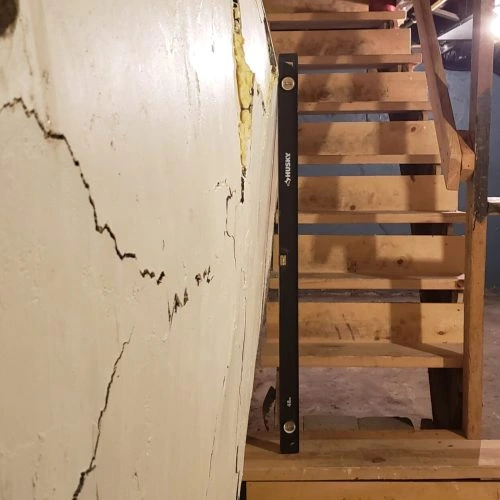
- Lateral pressure. Clay against the outside of a basement wall swells and pushes sideways. That is the force behind a horizontal crack and a wall that starts to bow inward.
Because one corner of a house can be drying while another is soaking, clay damage rarely looks even. One side lifts, another drops, and the foundation gets wracked between them. That sideways push is covered in depth in our guide to horizontal foundation cracks.
The Signs Clay Is Working on Your House
Clay-driven movement usually shows up as:
- • Stair-step cracks in brick, block, or mortar joints outside
- • Diagonal cracks running from the corners of doors and windows
- • Doors and windows that stick, bind, or will not latch like they used to
- • Floors that feel sloped, uneven, or bouncy
- • Gaps opening between walls and trim, or between the ceiling and the wall
- • A basement wall that is bowing or leaning inward
Thin vertical cracks are often just a little settling and nothing to lose sleep over, and we sort out which ones matter in our guide to vertical foundation cracks. The cracks that run at an angle or step along the joints are the ones that point at soil movement. A simple way to tell if it is still moving: mark each end of a crack with a pencil, write the date, and watch whether it creeps past your marks over the next few weeks.
Seeing cracks or sticking doors and wondering if the soil is behind it?
A free inspection tells you whether the movement is active and what, if anything, your foundation needs, with no pressure to buy.
What Actually Stops Clay Damage
You cannot replace the soil under a house, so a real fix works two angles: control the moisture that drives the clay, and support the foundation below the layer that moves.
Take the moisture swing out of it
Grading that slopes away from the house, gutters that work, and downspouts that discharge well away from the foundation all keep the clay from going through big wet and dry swings. Steadier moisture means steadier soil. On homes that also battle groundwater, that ties into basement waterproofing.
Carry the weight to stable ground
When a foundation has already settled, steel piers are driven or screwed down past the active clay to firm soil or bedrock, and the structure's weight transfers onto them. Done right, the house stops riding the clay. Our guide on helical piers in Colorado explains how that works and what it runs.
Brace walls against the sideways push
Where clay has bowed a basement wall inward, carbon fiber, wall anchors, or tiebacks lock it and, over time, can draw it back toward straight, while drainage work takes away the water pressure that caused it.
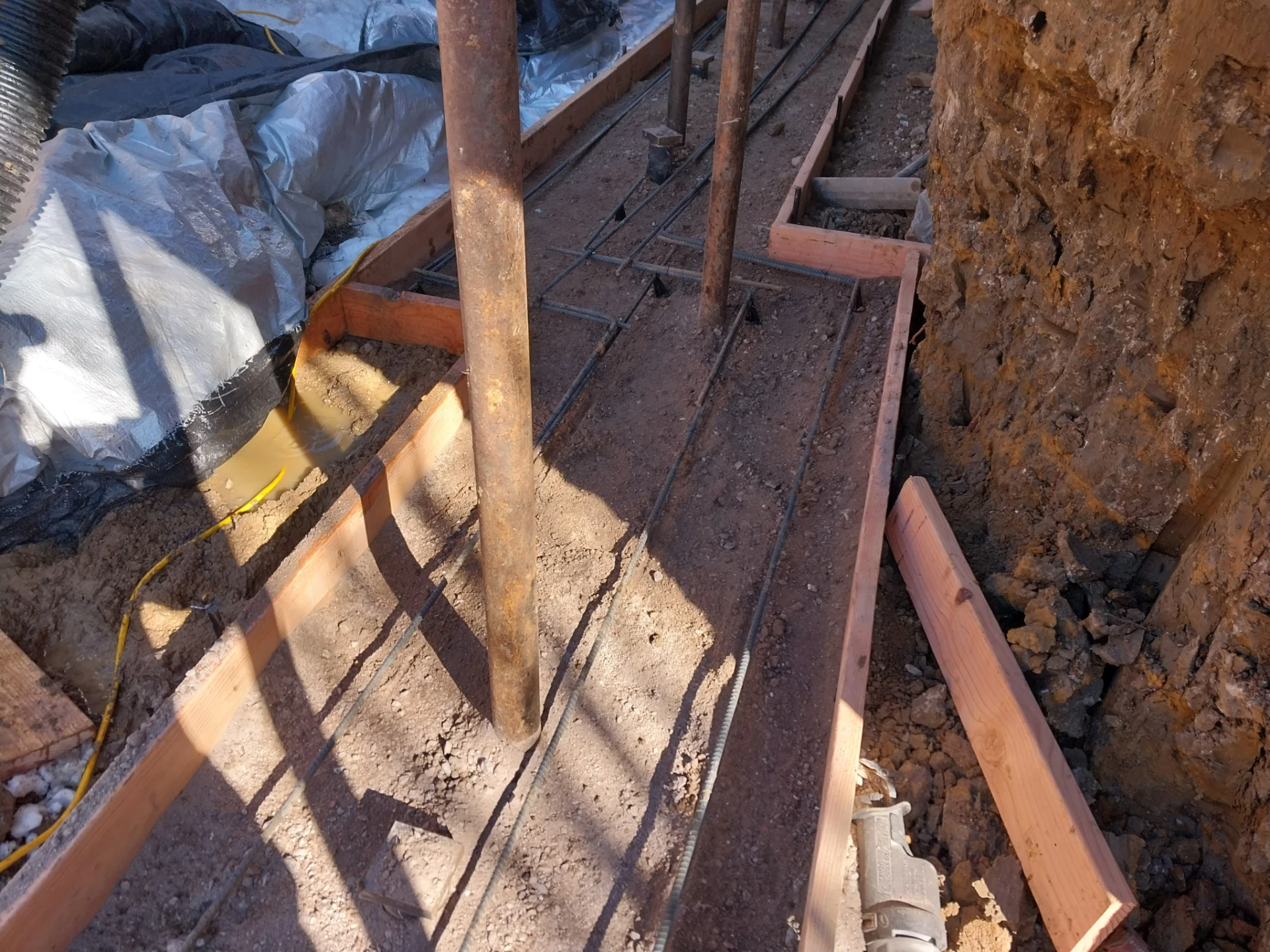
Which of these a house needs depends on what the soil has already done to it. That is what an inspection sorts out, and it is the work behind our Colorado Springs foundation repair and Denver foundation repair pages.
Frequently Asked Questions
The Takeaway
Expansive clay is the reason foundations along the Front Range crack and move so often, and it is not going anywhere. The good news is that it is a known, solvable problem. Control the moisture that feeds it, support the foundation where it has already moved, and a house built on active clay stays put. The first step is simply knowing whether yours is moving, which a free inspection answers.
Worried the Soil Is Moving Your Foundation?
Get a free professional inspection. We will tell you whether the movement is active, what is driving it, and recommend repairs only if they are truly needed.